Look Closer at the New Packaging Picture
The Unseen Hurdles Businesses Are Facing and the Hidden Opportunities You Might Be Missing
The day-to-day realities of keeping operations moving are hard enough. Hiring. Retention. Pricing. Customer expectations. Cash flow. Supply chain unpredictability.
Packaging rarely makes the top of that list. If it’s working, let it ride.
But 2026 is different in one important way. The pressures affecting packaging are stacking. And when pressures stack, they create both risk and opportunity in areas that haven’t been revisited in years.
Here is where that shift is showing up, and why it makes sense to take another, closer look at your packaging.
Sustainability is Now More Than a Brand Conversation
For a long time, sustainability was driven by marketing and consumer perception. Companies wanted to show they cared. Customers wanted to support responsible brands.
That dynamic has changed.
In 2026, sustainability is increasingly driven by regulation, customer requirements, and long-term cost exposure. States are introducing new recycling standards, labeling expectations, and producer responsibility programs. Some retailers and distributors are setting their own packaging requirements.
The challenge is keeping up with the speed and inconsistency of change.
Federal leadership shifts. State governments move at different speeds. Global markets often push faster than domestic ones. Some policies will stick. Others may soften or evolve as administrations change.
What makes 2026 different is the growing awareness that the direction of travel will likely continue, even if the pace varies.
Businesses that are responding well are building flexibility into materials, formats, and supply chains so they can adjust as needed without major disruption. That beats over-reaction or late reaction every time.
Tariffs and Global Tension are Standard
Supply chain disruptions were once viewed as temporary. Something that would eventually stabilize. That is no longer true.
Trade tensions, tariffs, and geopolitical uncertainty are continuing to affect packaging materials, from metals to plastics to specialty components. Sudden price shifts and long lead times are no longer rare. These new realities aren’t going anywhere anytime soon.
The biggest shift in 2026 is mindset. Instead of waiting for a return to normal, businesses are building systems that can function in an unstable environment.
This includes:
– Redundant sourcing
– Increased domestic supply
– Contingency planning
– Smaller, more agile production runs
The goal is resilience rather than just efficiency. We need both, and we need it now more than ever.
Cost Pressure Has Forced a Deeper Look at Packaging
Margin pressure has not gone away. At the same time,.jpg?width=253&height=190&name=Tonys%20Meats%20-%20Floor%20-%20Digital%20-%20Food%20(2).jpg) customer expectations continue to rise.
customer expectations continue to rise.
Common opportunities for cost savings emerging in 2026 include:
– Right-sizing to reduce freight costs
– Lightweight materials
– Simplifying packaging systems
– Reducing product damage and returns
– Standardizing components across product lines
These changes may not attract attention externally, but internally, they create a significant financial and operational impact.
Packaging is increasingly viewed as a lever for profitability rather than a fixed expense. Here at Ashtonne Packaging, we enjoy finding ways to work with you to save money AND sell more product. That’s the good stuff!
Digital and Connected Packaging is Becoming Practical
What once seemed like a large-brand initiative is becoming accessible to mid-sized and growing companies. Everyone now has access to the world marketplace. That’s good news!
Connected packaging through QR codes, digital storytelling, and authentication tools is now being used to:
– Strengthen customer relationships
– Build brand loyalty
– Educate consumers
– Protect against counterfeiting
This is particularly relevant in premium and craft markets, where the customer experience extends beyond the product itself.
In 2026, this approach is measurable and scalable. The experiment is over.
Circular and Reusable Packaging is Gaining
Recycling has been part of the conversation for years. Reuse is now gaining attention, especially in B2B and distribution environments.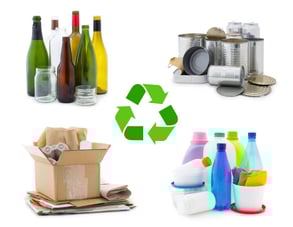
Reusable packaging systems are appealing because they address multiple challenges at once:
– Reduced exposure to raw material volatility
– Lower long-term cost
– Improved sustainability reporting
– More stable supply chains
While this model is not universal, adoption is accelerating in industries where logistics and durability matter.
What This Means for Business in 2026
None of these shifts requires immediate or dramatic change. And many are likely already on your radar.
But together, they point to a larger reality: packaging is becoming a strategic function rather than a background process.
Businesses can stand firm and chase a few of the loudest trends. But the smart organizations are looking deeper and making subtle changes that have deeper ramifications. They are paying attention, identifying risks, making intentional improvements, and seizing opportunities. They are partnering with their packaging companies.
The greatest risk in this environment is assuming that yesterday’s systems will remain sufficient for tomorrow’s challenges. For businesses focused on keeping operations moving, that assumption is understandable.
But the companies that pause long enough to examine the quiet parts of their operations are often the ones best prepared for what comes next.
Let's talk about how we can work together to pause and seize opportunities. We're ready to help. Give us a call at 877-522-6937 or contact Ashtonne Packaging and let's figure this out together. We look forward to it!